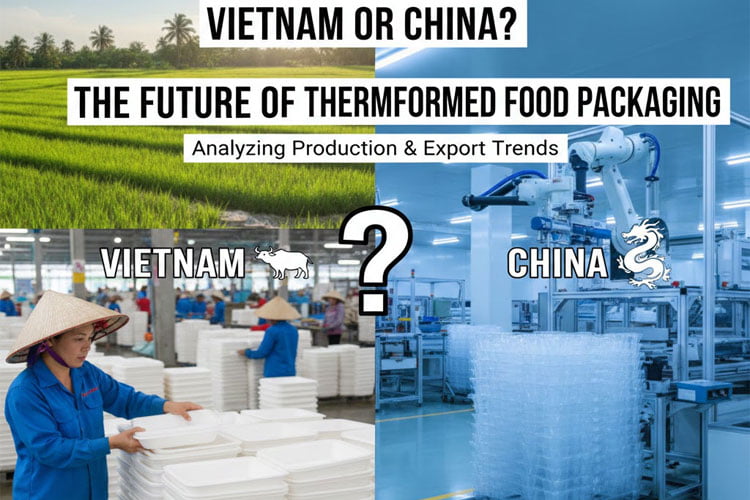
Choosing your manufacturing partner is a critical decision. The wrong choice can lead to high costs and supply chain headaches. This guide breaks down the real pros and cons of sourcing from China versus Vietnam.
The best choice depends on your specific needs. China offers a complete supply chain[^1], superior technology, and deep customization capabilities. Vietnam provides a strategic advantage for avoiding US tariffs[^2], but this comes with higher overall costs and less flexibility for custom projects.
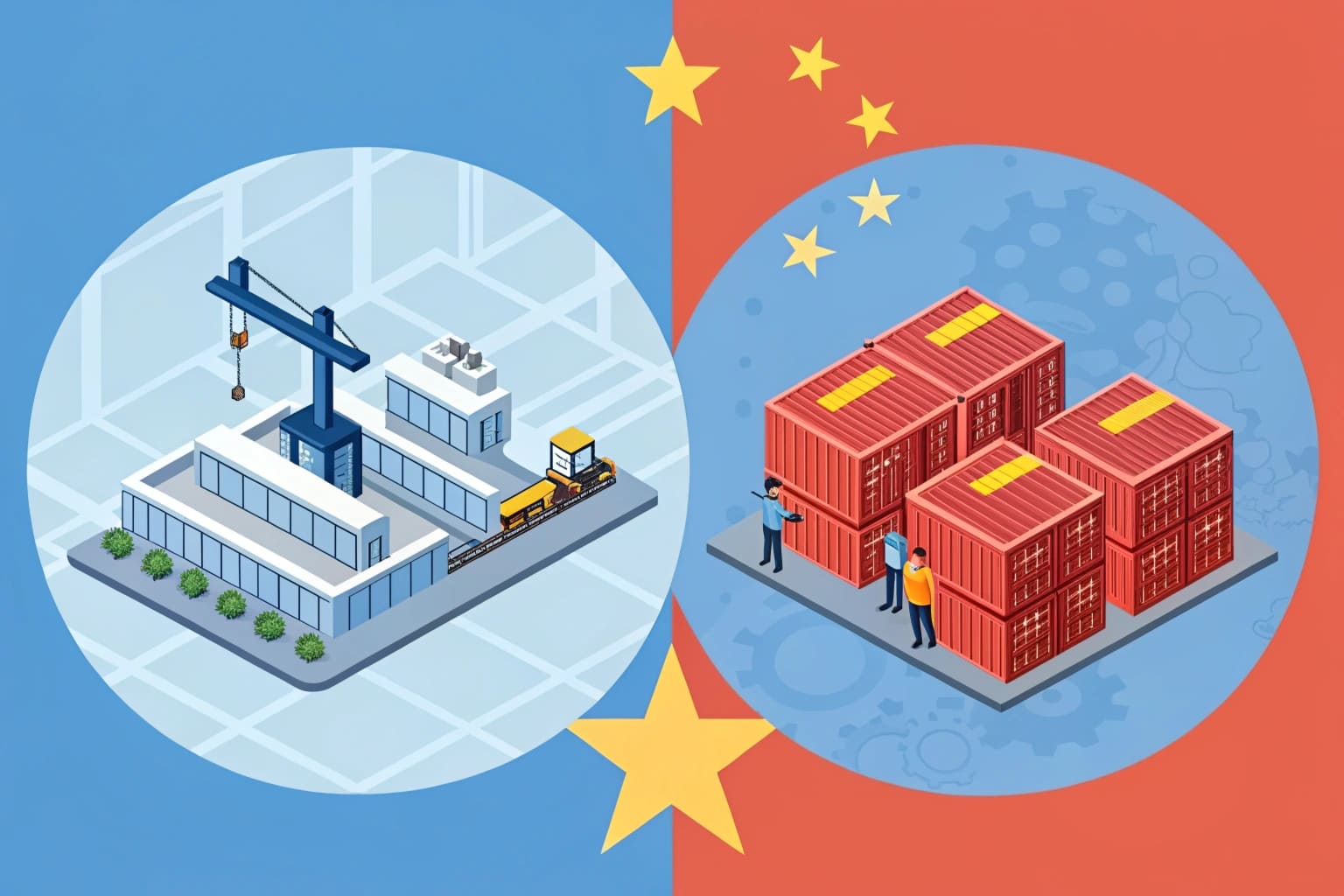
This decision has become more complex in recent years, especially for businesses serving the US market. The trade landscape is always shifting, and you need a strategy that protects your business both now and in the future. I've been in this industry for over a decade, and I've helped countless clients navigate this choice. Let's dive into the details so you can make an informed decision for your brand.
Where Are China's Top Thermoformed Food Container Factories Located?
You want the best quality for your packaging, but you don't know where to start looking in a country as vast as China. It's a common problem. I'll show you the two key regions that are hubs for packaging excellence.
Most top-tier thermoformed packaging[^3] manufacturers are concentrated in two main provinces: Guangdong and Zhejiang. Guangdong, especially the Pearl River Delta[^4], is known for its complete supply chain[^1] and export experience. Zhejiang is a major hub for cost-effective, large-scale production of standard items.
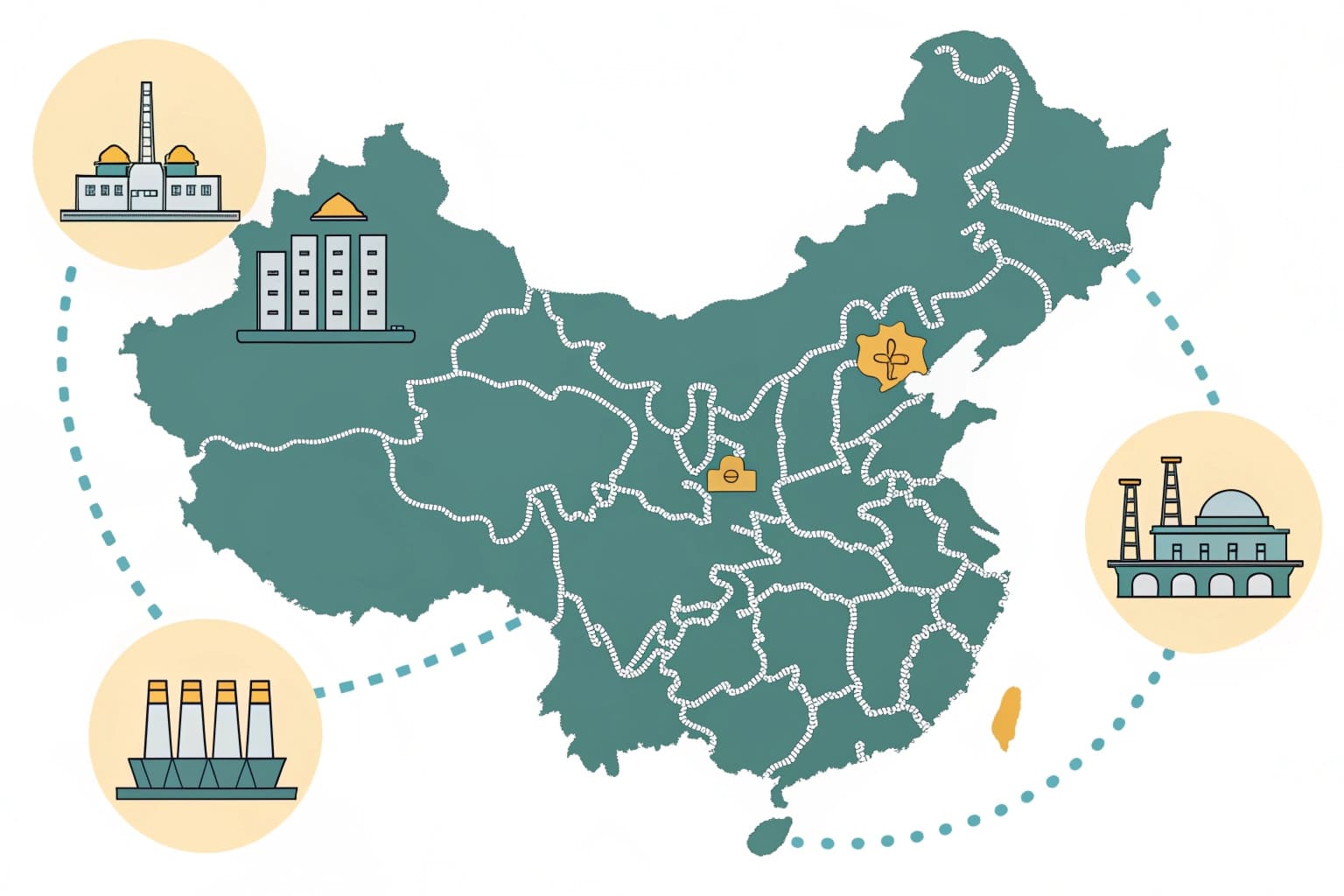
I've spent my entire career working within these supply chains, and they each have unique strengths. Understanding them is key to finding the right partner. China produces over 40% of the world's thermoformed packaging[^3], and that expertise is not spread out evenly. It's highly concentrated in these two powerful regions, each supported by an incredible ecosystem of suppliers and talent.
Guangdong vs. Zhejiang: A Deeper Look
Your choice between these two provinces depends entirely on what you want to achieve. Are you developing a new, unique product, or do you need to produce millions of a standard container at the lowest possible price?
My own company, XRS Packaging, is based in Dongguan, which is right in the heart of the Pearl River Delta[^4] in Guangdong. We are here for a reason. This area is the global center for mold making[^5] and precision engineering. This means we have immediate access to the best tooling experts, the latest materials, and the most advanced machinery. It allows us to do complex R&D and create custom packaging[^6] that other regions simply can't.
Zhejiang, on the other hand, excels at efficiency and volume. Factories there are masters of producing high quantities of simpler, more standardized products.
Here is a simple breakdown to help you understand the difference:
| Feature | Guangdong (Pearl River Delta[^4]) | Zhejiang |
|---|---|---|
| Key Strength | R&D, Customization, High-End Products | High-Volume, Cost-Effective Production |
| Major Cities | Dongguan, Shenzhen, Guangzhou | Ningbo, Taizhou, Wenzhou |
| Supply Chain | Extremely complete, advanced mold making[^5] | Very strong, focused on production efficiency |
| Best For | New product development, complex custom designs, private labels | Standard containers, commodity items, massive quantities |
So, if you need a partner for innovation, Guangdong is your destination. If your primary driver is the lowest unit cost on a standard item, Zhejiang is a strong contender.
When Did Chinese Factories Start Moving to Vietnam?
You've probably heard a lot about companies shifting production to Vietnam. But this isn't a random trend. It started at a specific time for a very specific reason, driven by global politics and the world's largest consumer market.
The first significant wave of Chinese packaging factories moved to Vietnam around 2018. This was a direct response to the US-China trade war[^7] and the 25% tariffs imposed on Chinese goods. Manufacturers needed a way to continue serving the massive US market.
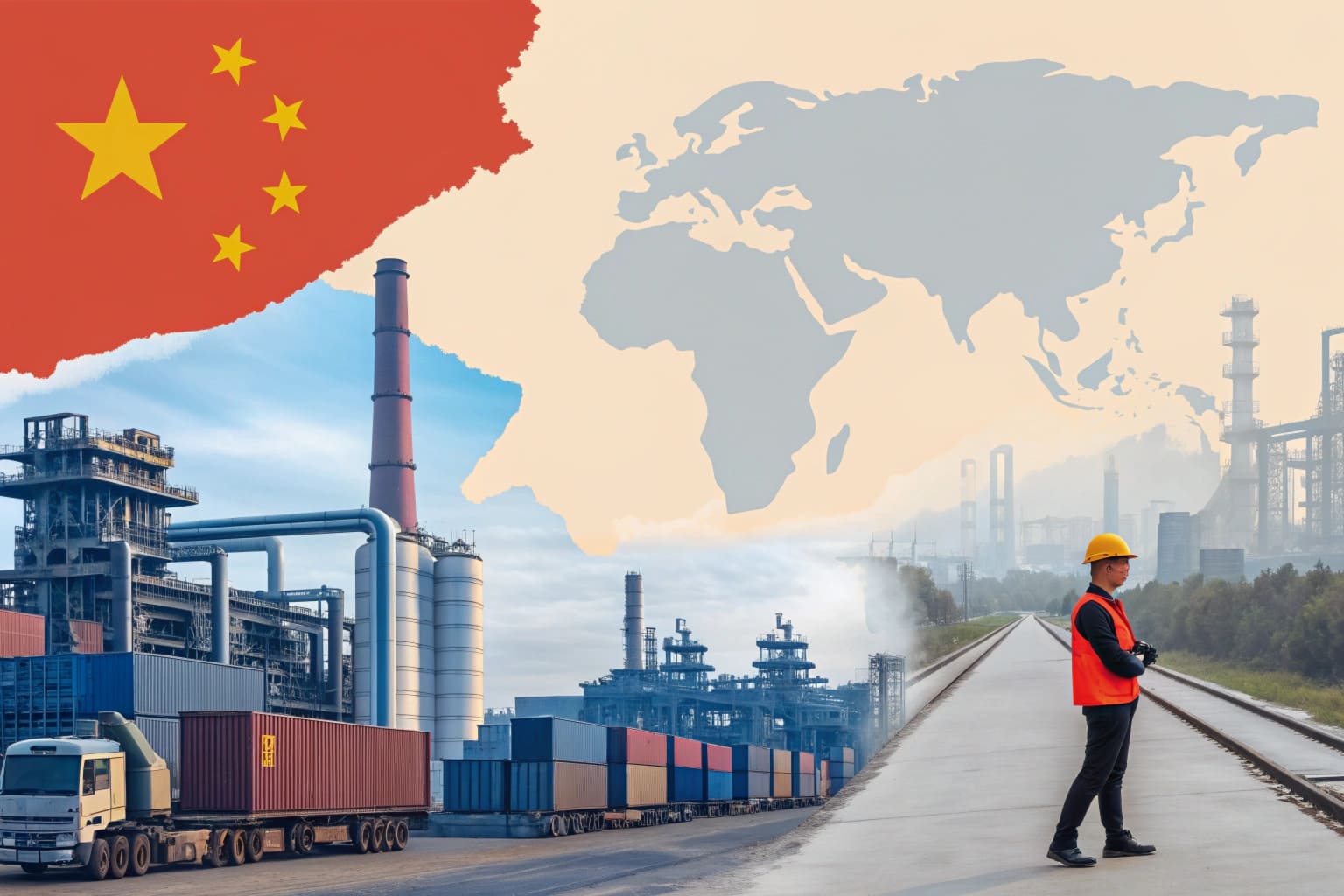
This was a major turning point for our industry. The United States accounts for over 60% of the entire global market for thermoformed food packaging. When a 25% tariff was suddenly added to the cost, it sent shockwaves through the supply chain. I remember the conversations I had with clients and fellow factory owners. The uncertainty was immense. For US-based importers, distributors, and large supermarket chains, that 25% was a direct hit to their margins.
The move to Vietnam wasn't about abandoning China. It was the birth of the "China+1" strategy. The idea was to keep the core strengths of the Chinese supply chain while adding a second production location to mitigate tariff risk. The first factories that moved were not setting up brand-new, independent operations. They were essentially creating satellite facilities. They would ship Chinese machinery, Chinese molds, and even key personnel to Vietnam to set up final production lines. It was a pragmatic solution to a huge political problem. I personally know several owners who made this move. They faced enormous challenges with logistics, training, and quality control, proving it was far from a simple copy-and-paste operation.
Is Manufacturing in Vietnam Actually Cheaper Than China?
Everyone assumes that moving production to Vietnam automatically means lower costs because of cheaper labor. This is a dangerous oversimplification. I've run the numbers many times, and the reality will surprise you. Hidden costs can quickly erase any savings on labor.
No, for thermoformed packaging[^3], it is often not cheaper. While labor is less expensive, the total production cost in Vietnam is typically 10-15% higher than in China. This is because Vietnam's industrial supply chain is still developing, requiring the import of almost everything.
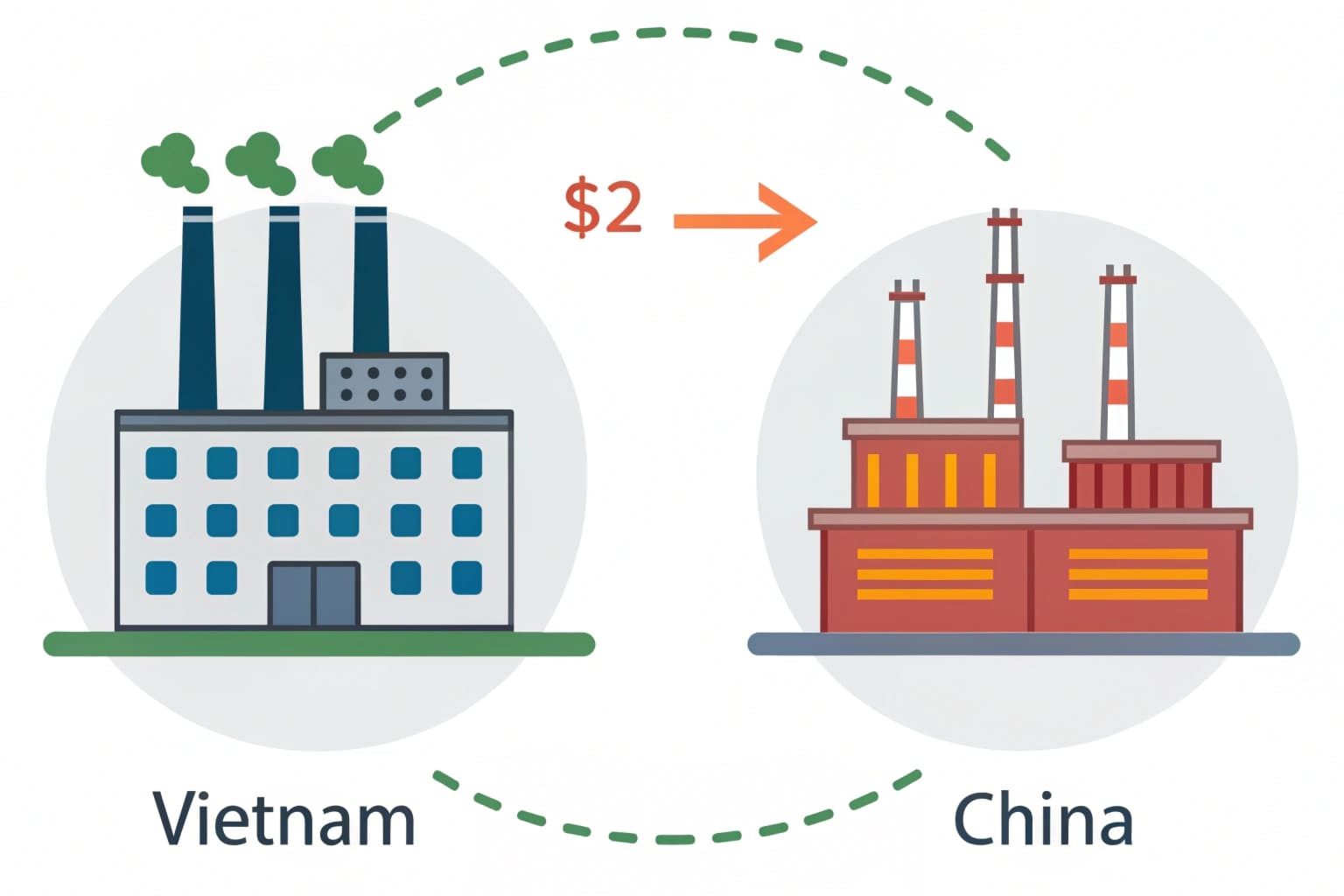
Let's break down why this is the case. Think of it like baking a cake. You can hire a baker for less (labor), but if you have to import the flour, sugar, eggs, and even the oven itself (materials and machinery), the final cake is going to cost you more. It's the exact same situation in thermoforming.
China has a massive, world-class upstream petrochemical industry. This means we get raw materials like PET and PP directly and cost-effectively. Vietnamese factories often have to import these same raw materials, adding shipping and import costs right from the start.
The biggest factor, however, is the machinery and molds.
- Machinery: The most advanced, efficient thermoforming machines are built in China and Europe. A new factory in Vietnam must import these expensive machines.
- Molds & Tooling: This is the most critical part of custom packaging[^6]. Mold making is a highly specialized skill. China is the world's leader in producing high-quality, complex molds at a competitive price. A factory in Vietnam almost always has to order its molds and even replacement parts from a specialist supplier in China. This adds cost, creates delays, and makes quick adjustments or repairs nearly impossible.
When you add up the higher costs for materials, machinery, molds, and less efficient logistics, the cheaper labor is more than canceled out. The final "ex-factory" price from Vietnam is almost always higher than from China.
With Potential "Trump 2.0" Tariffs, Should You Source from Vietnam or China?
The threat of future tariffs, potentially as high as 45% or even 60%, makes your sourcing decision more critical than ever. A wrong move could destroy your margins. This is no longer just a cost issue; it's about strategic survival.
A "China+1" strategy is now essential. For standard, high-volume products sold to the US, moving production to Vietnam is a logical way to avoid massive tariffs. However, for any custom design, R&D, or complex project, China remains the only viable choice.
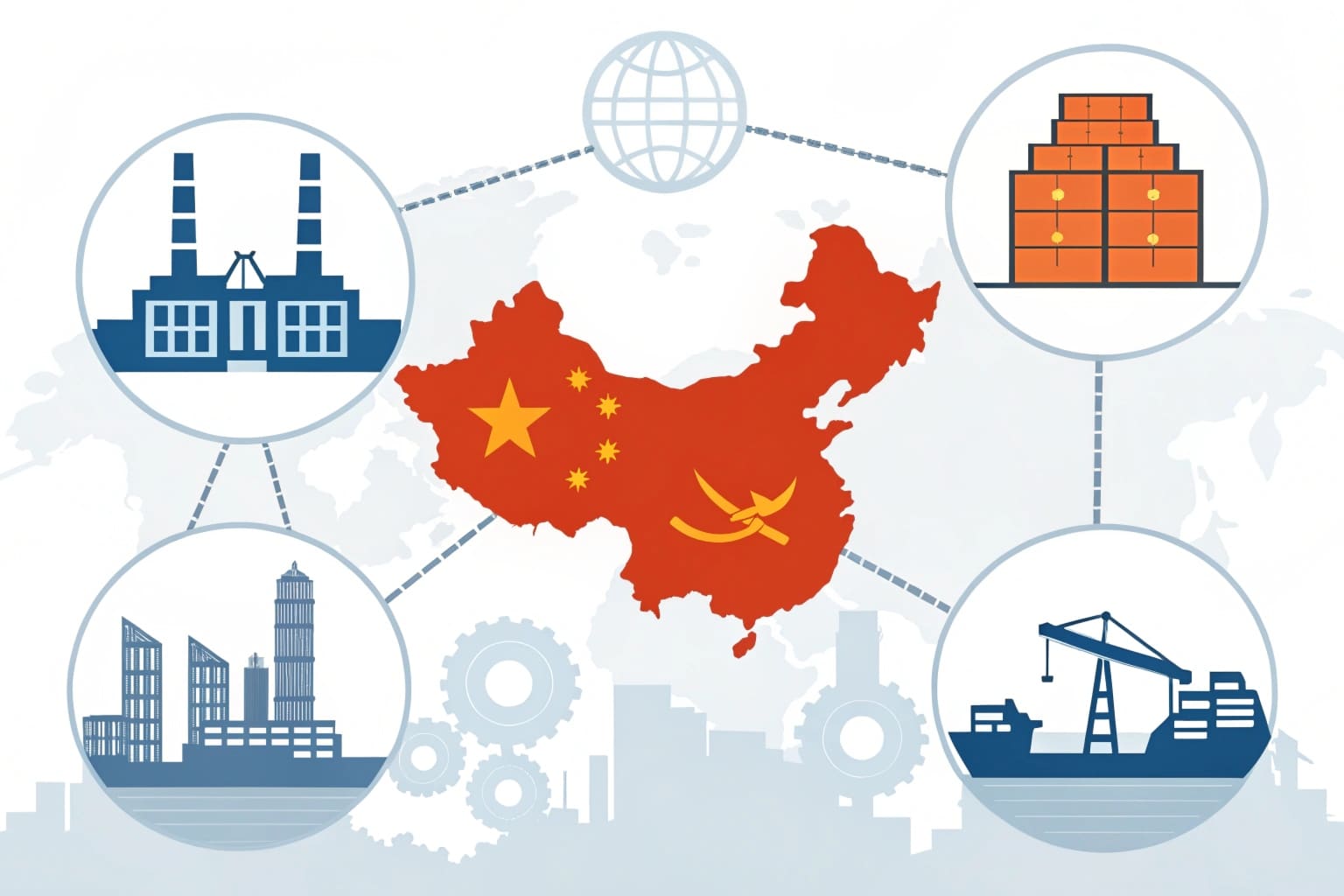
In the past, many US importers were willing to absorb the 25% tariff because China's efficiency and quality still made it worthwhile. But a 45% or 60% tariff is a different story. It's simply not sustainable for most businesses. This will force a strategic split in the supply chain.
This is how the "China+1" model works in practice:
- China's Role: The "Brain". This is where all the innovation happens. We use our R&D centers and in-house mold-making workshops in China to design, prototype, and perfect your custom packaging[^6]. This is for complex products and building your brand identity.
- Vietnam's Role: The "Hands". This is for the mass production of established, simple, high-volume products. Its primary function is to be a tariff-free gateway[^8] to the US market.
We are already implementing this hybrid model for our forward-thinking clients. We develop and tool a new custom product here in Dongguan, then we coordinate with a partner facility in Vietnam to handle the mass production for their US-bound orders. This gives them the best of both worlds.
Here’s a clear guide to help you decide:
| Sourcing Strategy | Best For | Pros | Cons |
|---|---|---|---|
| China Only | Custom private labels, new product development, complex shapes | Fast R&D, lower base cost, total flexibility, highest quality | Fully exposed to high US tariffs[^2] |
| Vietnam Only | High-volume standard items (e.g., generic clamshells) | Avoids US tariffs[^2] on standard goods | Higher base cost, very little flexibility, slow R&D, dependent on China |
| China + Vietnam Hybrid | Businesses needing both innovation and tariff security | Best of both worlds, supply chain resilience[^9], brand protection | Requires managing a more complex supply chain |
How Do You Find a Reliable Manufacturer for Custom Packaging Needs?
You have a great idea for a product that needs unique packaging. Finding a factory that can truly turn your vision into a physical reality is difficult. Many factories will say "yes" to everything, but very few have the capability to deliver on custom projects.
Look for a manufacturer with a strong, in-house R&D department and their own mold-making workshop. A true partner will have deep roots in China's mature manufacturing ecosystem, even if they offer production in Vietnam. Always ask about their design process and past custom projects.
Finding a reliable partner for custom work is about looking for specific capabilities, not just a low price. If a potential supplier outsources their mold design and creation, you should walk away. Outsourcing this critical step adds massive delays, costs, and a huge risk of errors. You lose all control over the most important part of your project.
As Vietnam's manufacturing base grows, you will see more factories there. However, most will be focused on high-volume production of simple items. The deep engineering and design talent will remain in China.
Here is a checklist to use when vetting a potential custom packaging[^6] partner:
- In-House R&D and Mold Making: Is their tooling workshop on-site? Can you speak directly with the engineers? This is non-negotiable.
- Material Expertise: Do they understand the performance differences between PET, RPET, PP, and PLA? Can they advise you on the right material for your product's needs (e.g., freezer-safe, microwaveable, clarity)?
- A Clear Process: Ask them to walk you through their process from idea to mass production. At XRS Packaging, our process is clear: consultation -> 3D design -> prototype mold -> sample approval -> production mold -> mass production.
- Certifications: Do they hold key certifications like ISO 9001 (quality management) and BRC (food safety)?
- Proven Track Record: Ask to see case studies or physical samples of custom projects they have completed for other brands.
Ultimately, your best strategy is to find a Chinese manufacturer with proven, in-house R&D and tooling, who can also offer you a production solution in Vietnam. This gives you access to world-class innovation and a smart way to navigate the tariff landscape.
Conclusion
The choice between China and Vietnam is not about which is "better," but which is right for your needs. China leads in custom innovation, while Vietnam offers a tariff solution. A hybrid strategy is the smartest path forward.
---

[^1]: Understanding a complete supply chain helps you see how China can offer superior technology and customization capabilities.
[^2]: Learn how US tariffs can affect your manufacturing decisions and why Vietnam might be a strategic choice.
[^3]: Thermoformed packaging is a significant part of the manufacturing industry; learn its advantages and applications.
[^4]: Discover why the Pearl River Delta is crucial for mold making and precision engineering in China.
[^5]: Mold making is essential for custom packaging; learn why it's a specialized skill and its importance.
[^6]: Custom packaging can differentiate your brand; discover its benefits and how it supports product identity.
[^7]: Understand the impact of the US-China trade war on manufacturing decisions and supply chain strategies.
[^8]: Vietnam offers a strategic advantage for avoiding US tariffs; learn how it serves as a tariff-free gateway.
[^9]: Supply chain resilience is vital for strategic survival; learn how to build a robust supply chain.